5 Costly Forklift Training Mistakes Plymouth Businesses Make (And How to Avoid Them)
If you run a warehouse, yard, or construction site in Plymouth or the surrounding Devon and Cornwall areas, forklift training probably feels like a box to tick.
That’s exactly where businesses get caught out.
Most companies only realise there’s a problem after an accident, a near miss, or a compliance check. By then, it’s already costing time, money, and potentially reputation.
Here are five of the most common (and expensive) mistakes we see — and how to avoid them.
1. Assuming Experienced Operators Don’t Need Refresher Training
It’s one of the biggest misconceptions.
Just because someone has years of experience doesn’t mean they’re operating safely or in line with current standards. Bad habits creep in, and guidance evolves.
The HSE recommends periodic refresher training, and many insurers expect it.
The risk:
Increased accident likelihood
Liability issues if something goes wrong
The fix:
Schedule refresher training every 3–5 years or sooner if there’s been an incident or change in equipment.
2. Using the Wrong or Outdated Certification
Not all training is equal.
Employers sometimes rely on old, unverified, or non-accredited training records. That can leave your business exposed.
Recognised accreditations like NPORS ensure operators meet national standards and provide proper documentation.
The risk:
Non-compliance during inspections
Invalid insurance in the event of an accident
The fix:
Always check certification is current, relevant, and from a recognised awarding body.
3. Not Training for the Specific Equipment Being Used
A counterbalance forklift is not the same as a VNA truck or a telehandler.
Yet many businesses assume a general licence covers all equipment — it doesn’t.
The risk:
Operators using unfamiliar controls and working environments
Increased likelihood of damage or injury
The fix:
Ensure training matches the exact machine type, whether that’s:
VNA (Very Narrow Aisle)
Pallet stackers
Telehandlers
Rough terrain trucks
4. Poor Record Keeping and No Proof of Competence
When was your last training record audit?
In many cases, businesses either can’t locate certificates or don’t have clear records of who’s trained on what.
The risk:
Immediate issues during HSE inspections
No legal protection if an incident occurs
The fix:
Keep organised, accessible records including:
Training dates
Certification copies
Machine categories covered
5. Choosing Price Over Proper Training
Cheap training often cuts corners — shorter durations, minimal assessment, or lack of accreditation.
It might save money upfront, but it rarely does long term.
The risk:
Poorly trained operators
Higher accident rates
Repeat training costs
The fix:
Choose a provider that focuses on quality, compliance, and real-world application — not just price.
Why This Matters in Plymouth & The South West?
Local businesses face specific challenges:
Tight industrial estates
Mixed-use yards
Uneven or rural terrain
High turnover in warehouse roles
This makes proper, equipment-specific training even more critical.
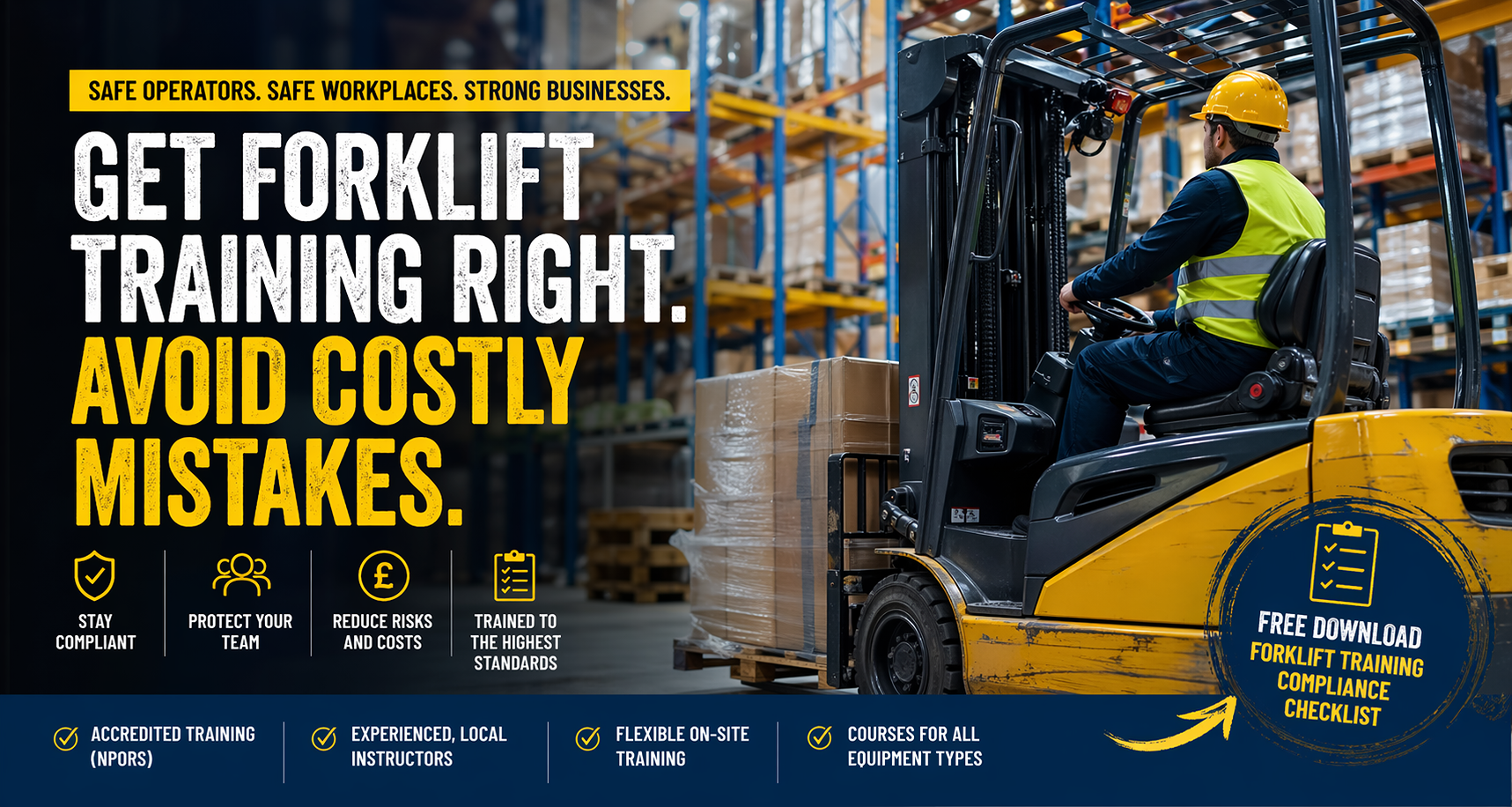
✅ Free Download: Forklift Training Compliance Checklist
If you’re not 100% sure where your business stands, use this quick checklist:
Forklift Training Compliance Checklist (UK Employers)
Operators
All operators formally trained
Refresher training completed within last 3–5 years
Training matches equipment used
Certification
Accredited provider (e.g. NPORS)
Certificates on file and up to date
Proof of competence available
Equipment
Operators trained on each truck type used
Familiarisation training completed for new equipment
Records
Training log maintained
Easy access to documentation
Expiry/refresher dates tracked
Workplace Safety
Risk assessments in place
Safe systems of work documented
Supervisors aware of training status
👉 Want a copy of this checklist as a printable PDF?
Get in touch and we’ll send it over — no obligation
Need Help Checking Your Compliance?
At Tamar Valley Training, we work with businesses across Plymouth, Devon, and Cornwall to make sure operators are properly trained, certified, and confident on the equipment they use every day.
Whether you need:
Refresher training
New operator courses
On-site assessments
We can help you get it sorted quickly and properly.
Get in touch today to arrange a quick, no-pressure training check.