What Is a Telehandler? Uses, Safety, Legal Requirements & Training in the UK
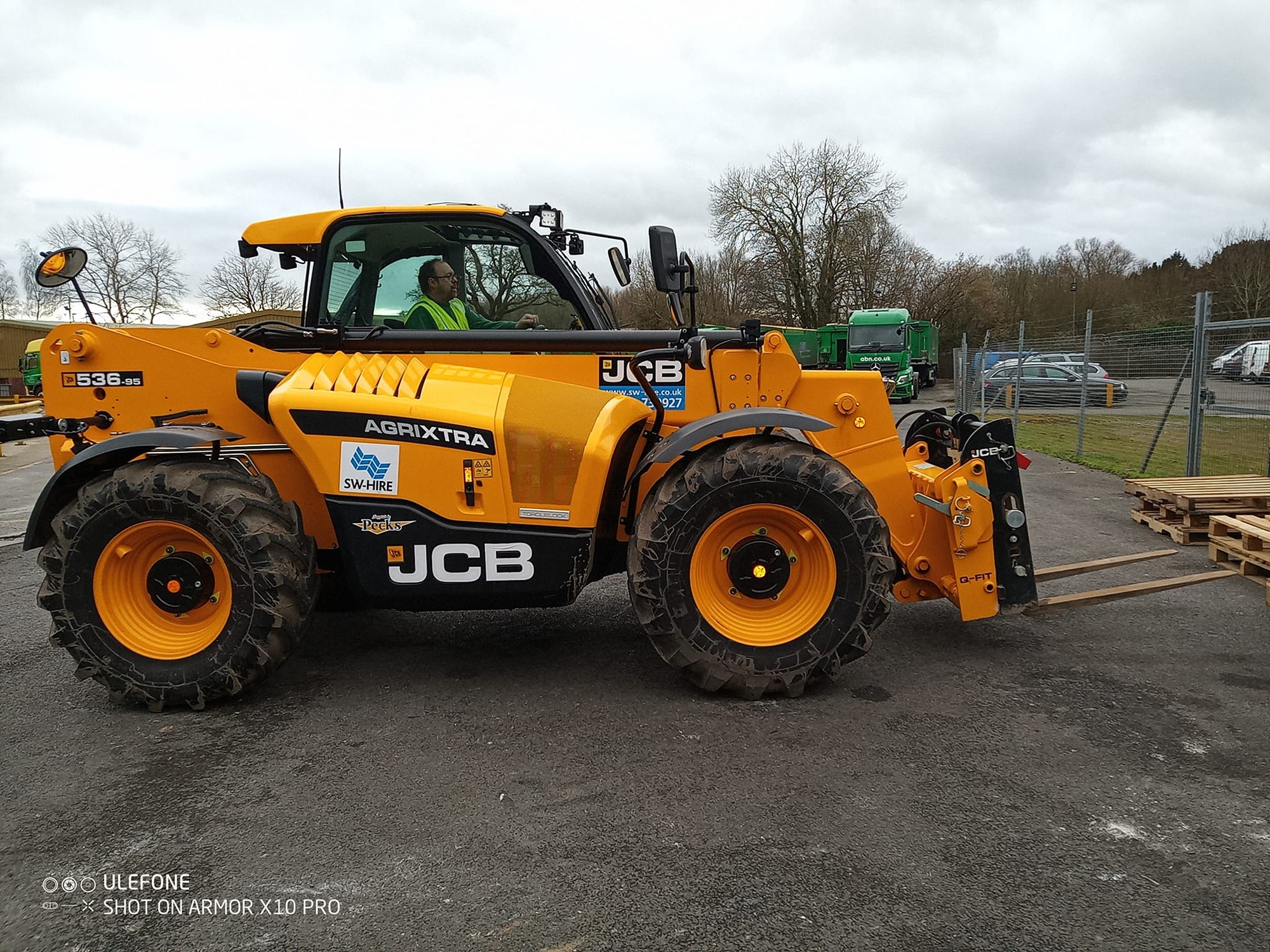
A telehandler (telescopic handler) is a versatile piece of lifting equipment widely used in construction, agriculture, and industrial environments. It combines the lifting capability of a forklift with the reach of a crane, making it essential for moving materials safely and efficiently on site.
Telehandlers are commonly fitted with forks, but can also use a range of attachments including buckets, lifting hooks, and work platforms, allowing them to perform multiple tasks.
🔧 Common Uses of Telehandlers
🔧 Common Uses of Telehandlers
Telehandlers are used across a wide range of industries due to their flexibility and power.
Construction Sites
Moving pallets of bricks and blocks
Lifting materials to height (e.g. roof level)
Supporting groundwork operations
Agriculture
Handling hay bales
Loading feed and materials
General farm lifting tasks
Industrial & Warehousing
Transporting heavy loads
Loading and unloading vehicles
Supporting logistics operations
👉 Their ability to extend forward and upward makes them far more versatile than standard forklifts.
⚠️ Why Telehandlers Can Be Dangerous
Telehandlers are powerful machines — and when used incorrectly, they are one of the most dangerous pieces of equipment on site.
Common risks include:
Overturning due to unstable loads
Dropping materials from height
Collisions with people or structures
Operating on uneven ground
Because of these risks, proper training is not optional — it is essential.
📜 UK Legal Requirements for Telehandler Operation
In the UK, operating a telehandler is governed by several key pieces of legislation.
1. Health and Safety Executive (HSE)
that:
Operators must be trained, competent, and authorised to use machinery.
2. Provision and Use of Work Equipment Regulations 1998 (PUWER)
PUWER requires that:
Equipment is safe to use
The HSE states
Operators are adequately trained
Proper maintenance is carried out
3. Lifting Operations and Lifting Equipment Regulations 1998 (LOLER)
LOLER focuses on:
Safe lifting practices
Regular inspections
Proper planning of lifting operations
👉 Bottom line:
If an employer allows untrained staff to operate a telehandler, they are breaking the law and risking serious penalties.
🎓 Do You Need a Licence to Operate a Telehandler?
There is no single “licence” in the traditional sense.
However:
✔️ You must be trained and competent
✔️ You should hold a recognised certification such as NPORS
This is where structured training becomes essential.
🏗 What Does Telehandler Training Involve?
Professional training ensures operators can use the machine safely and efficiently.
A typical course covers:
Pre-use inspections
Machine controls and operation
Load handling and stability
Working on slopes and uneven ground
Safety regulations and site awareness
Practical driving and lifting exercises
Training usually lasts between 1–5 days depending on experience.
📍 Telehandler Training in Devon & Cornwall
If you’re based in the South West, it’s important to choose a provider that understands local industries and site conditions.
At Tamar Valley Training, courses are delivered:
On-site at your location
With small groups for better learning outcomes
💰 How Much Does Telehandler Training Cost?
Costs can vary depending on:
Number of candidates
Experience level
Location of training
Most providers offer tailored pricing, especially for on-site group training.
👉 Tip: Businesses often save money by training multiple operators at once.
🧠 Benefits of Proper Telehandler Training
Investing in training provides clear benefits:
✔️ Reduced risk of accidents
✔️ Legal compliance
✔️ Increased efficiency on site
✔️ Lower insurance risks
✔️ Improved operator confidence
❓ Frequently Asked Questions
How long does a telehandler certificate last?
Typically, certification lasts 3–5 years, after which refresher training is recommended.
Can I operate a telehandler without training?
No — this would breach health and safety regulations and put lives at risk.
Is NPORS recognised?
Yes, NPORS is widely recognised across the UK construction and industrial sectors.
Can training be done on-site?
Yes — this is often the most efficient option for businesses.
📞 Ready to Get Certified?
If you’re looking for professional, flexible telehandler training in Devon or Cornwall, Tamar Valley Training can help.
👉 Speak directly with an experienced instructor and arrange your course today.